Health, Hope & Hip-Hop Foundation
They've spent decades trying to reach underserved communities.
Hip-hop
was
already doing it in 1989.
My diagnosis got me into advocacy, and advocacy got me a seat on pharmaceutical steering committees. What I heard in those rooms is what started this foundation: serious people with real budgets had been working this problem for decades and still weren't reaching the people who needed it most. Every few years the same approach came back in a different package.
I'm from the community they keep trying to reach. The soundtrack of my life has always been hip-hop and R&B — and that music had already proved it could carry health information further than any campaign. So I stopped waiting on a better package and built a different vehicle.
— Oya Gilbert, Founder & CEO
Why hip-hop
The blueprint already existed.
We expanded it.
Long before anyone called it health literacy, hip-hop was already delivering it — at a scale and with a credibility that no campaign has matched since.
"Self Destruction"
The Stop the Violence Movement · 1989After a fan was killed at a Boogie Down Productions and Public Enemy show, KRS-One pulled together Chuck D, MC Lyte, Heavy D, Kool Moe Dee, Doug E. Fresh and a dozen more. It came out on what would have been Dr. King's 60th birthday, held number one on the rap chart for ten straight weeks, and sent every dollar — over $100,000 — to the National Urban League for youth education.
"911 Is a Joke"
Public Enemy · 1990Flavor Flav's record about emergency response — and specifically about paramedic response times in Black neighborhoods, not police, which almost everyone gets wrong. It went to number one on the rap chart. That's a health access story, on the radio, thirty-six years ago.
"Let's Talk About Sex"
Salt-N-Pepa · 1991A hit record that carried safer-sex information to young listeners in the middle of the AIDS epidemic — without preaching, and in a way that actually landed. Peter Jennings asked the group to rework it for his ABC special on AIDS, and "Let's Talk About AIDS" followed. Health departments put it on posters.
Notice what the first one did. It wasn't a campaign about a problem — it was a record that funded the response to it. Artists made the music, the music made the money, and the money went to the community organization doing the work. That mechanism is the part we picked up.
We took that blueprint and expanded it — made with the culture, not aimed at it, and across every disease area rather than one.
Cardiovascular disease, cancer, chronic respiratory disease, and diabetes together account for about 60% of all health lost worldwide — and roughly two-thirds of deaths. No single diagnosis is the problem. The pattern is.
Global Burden of Disease Study 2021 · Institute for Health Metrics and Evaluation
So we don't run awareness campaigns. We bring licensed clinical partners, early-detection screenings, and clinical trial education into communities where follow-up care is hardest to reach — then stay long enough to be there the next time. Every program we run is open to anyone who walks up.
Choose your impact
Mic Check Myeloma - Atlanta, September 19. The second stop of the tour. Every seat in that room is paid for by someone who won't be sitting in it.
One seat a year
Twelve months of monthly giving sponsors one person's complete Mic Check experience — the day, the meal, the materials, the connection to actual care. It's the most useful thing you can do for us, because it lets us plan.
Prefer a different amount?
Every dollar
of it reaches the work.
Give
We fundraise through Zeffy, which charges us no platform fee and no processing cut. Most platforms take 3–8% of every gift. Here, your whole donation does the work.
Health, Hope & Hip-Hop Foundation, Inc. is a Delaware 501(c)(3) nonprofit. EIN 99-0880621.
Your donation is tax-deductible to the full extent allowed by law. Your receipt arrives by email immediately.
Giving for emergency relief?
The Last Straw Fund has its own page and its own form, so gifts land directly in that fund. If you want your money to reach one person in crisis rather than the work as a whole, start there instead.
Give to the Last Straw FundWhat your gift actually does
People walked in for the music.
They walked out with follow-up
appointments.
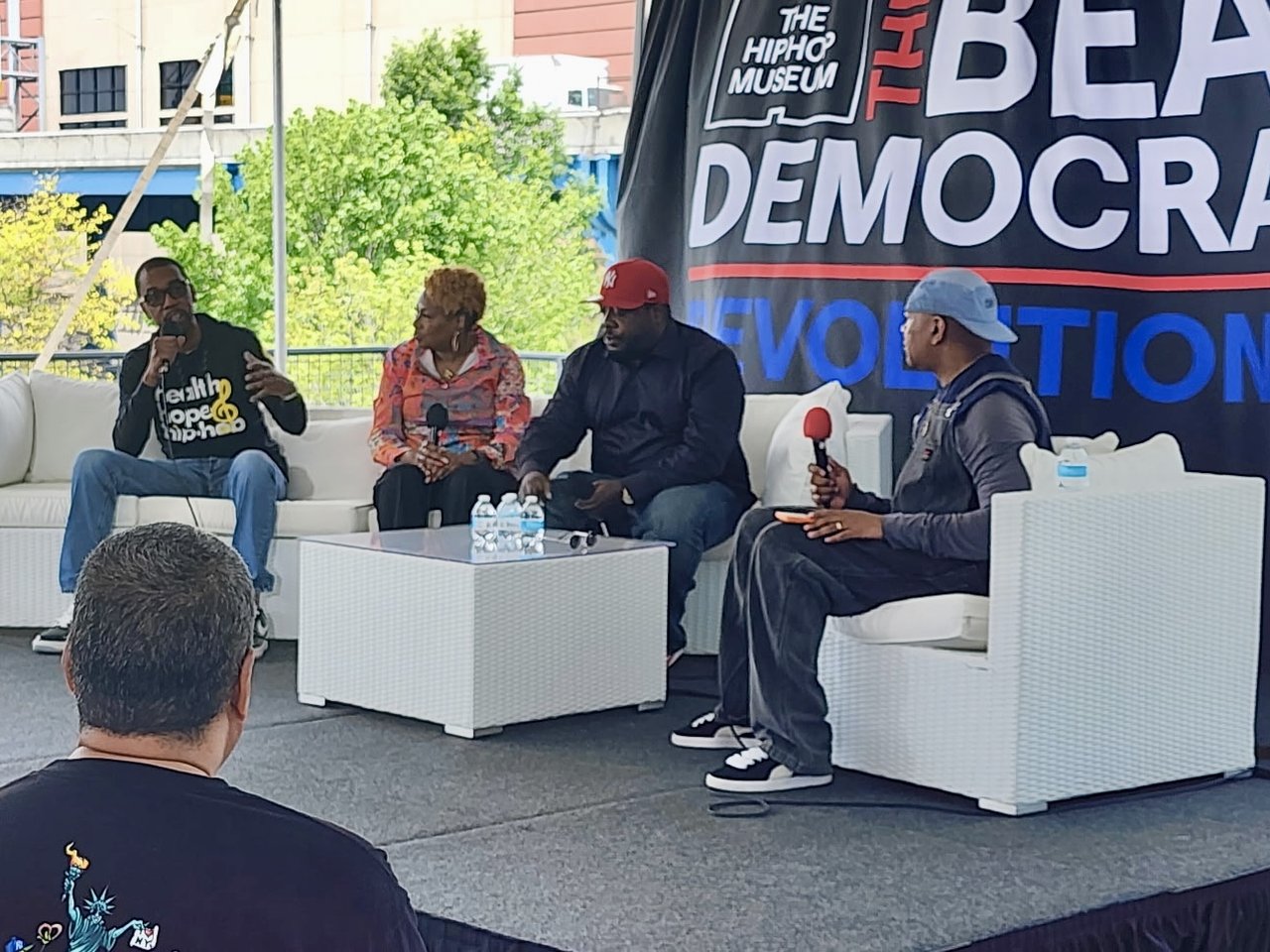
L–R: Oya Gilbert, Maria Davis, MC Stik-E, Kevin Powell
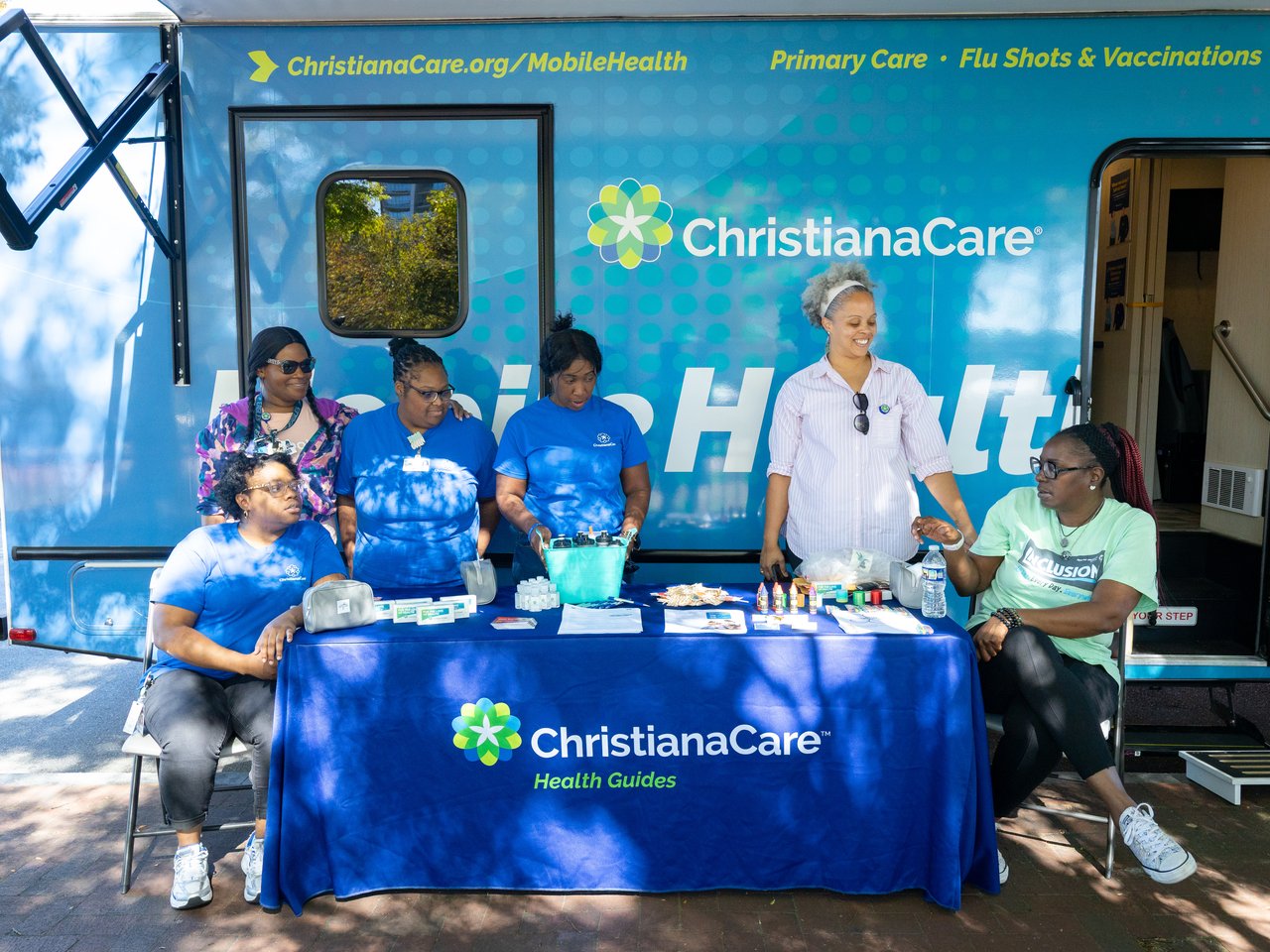
At our 2025 Block Party in Wilmington, licensed clinical partners provided free blood pressure checks on site. Several participants were referred for follow-up care that same day — and had appointments scheduled before they left.
Saturday was a day filled with Health, Hope and Hip Hop. You could not have titled your event any better. A few people were identified as having high blood pressure and appointments were made on the spot.
Shelley Nix Manager, Community Benefit and EngagementCommunity Health Impact · ChristianaCare
Where your money goes
Three ways we work the problem
Community events & health activations
Block parties, early-detection screenings with licensed clinical partners, International Hip Hop Health Day every June 17, and the Mic Check tour — bringing disease education and clinical trial awareness into communities where follow-up care is hardest to reach. Open to everyone.
Betterment Productions
Our content and culture arm. The Hip Hope Hooray podcast, original music, and campaigns that move health through the culture instead of around it.
The Last Straw Fund
Direct emergency relief, paid fast, for patients in crisis — because the bill that breaks someone often has nothing to do with their treatment. See the fund →
Why I started this
For years, I was told it was nothing. I was overlooked, misdiagnosed, and unheard — until someone finally said the words.
The diagnosis was multiple myeloma. But the diagnosis wasn't the discovery. What changed everything came later, when advocacy work put me on pharmaceutical steering committees and I got to hear how the industry talks about reaching underserved communities when the community isn't in the room.
They'd been at it for decades. Good intentions, real budgets, serious people — and still not reaching the people who needed it most. And every cycle, the same approach came back with new packaging and a new delivery. There's a word for doing the same thing over and over and expecting a different result.
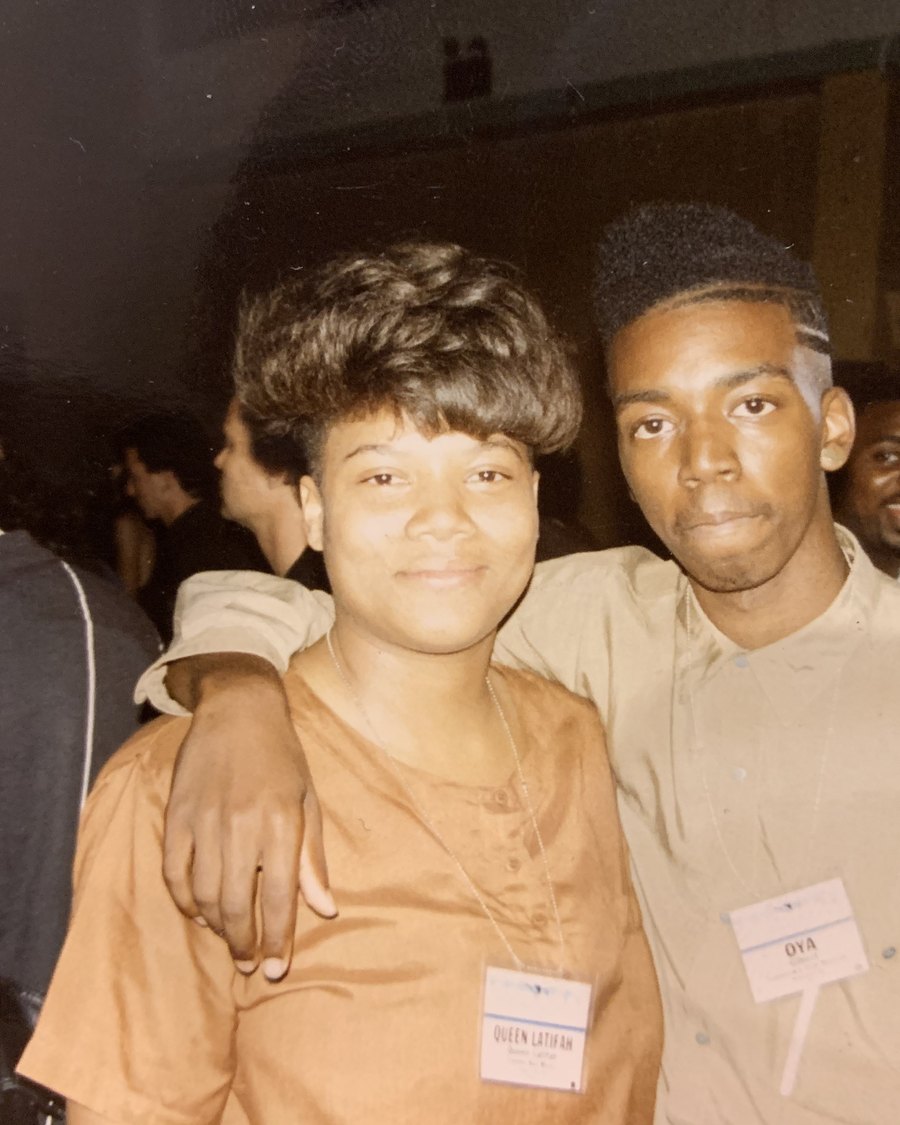
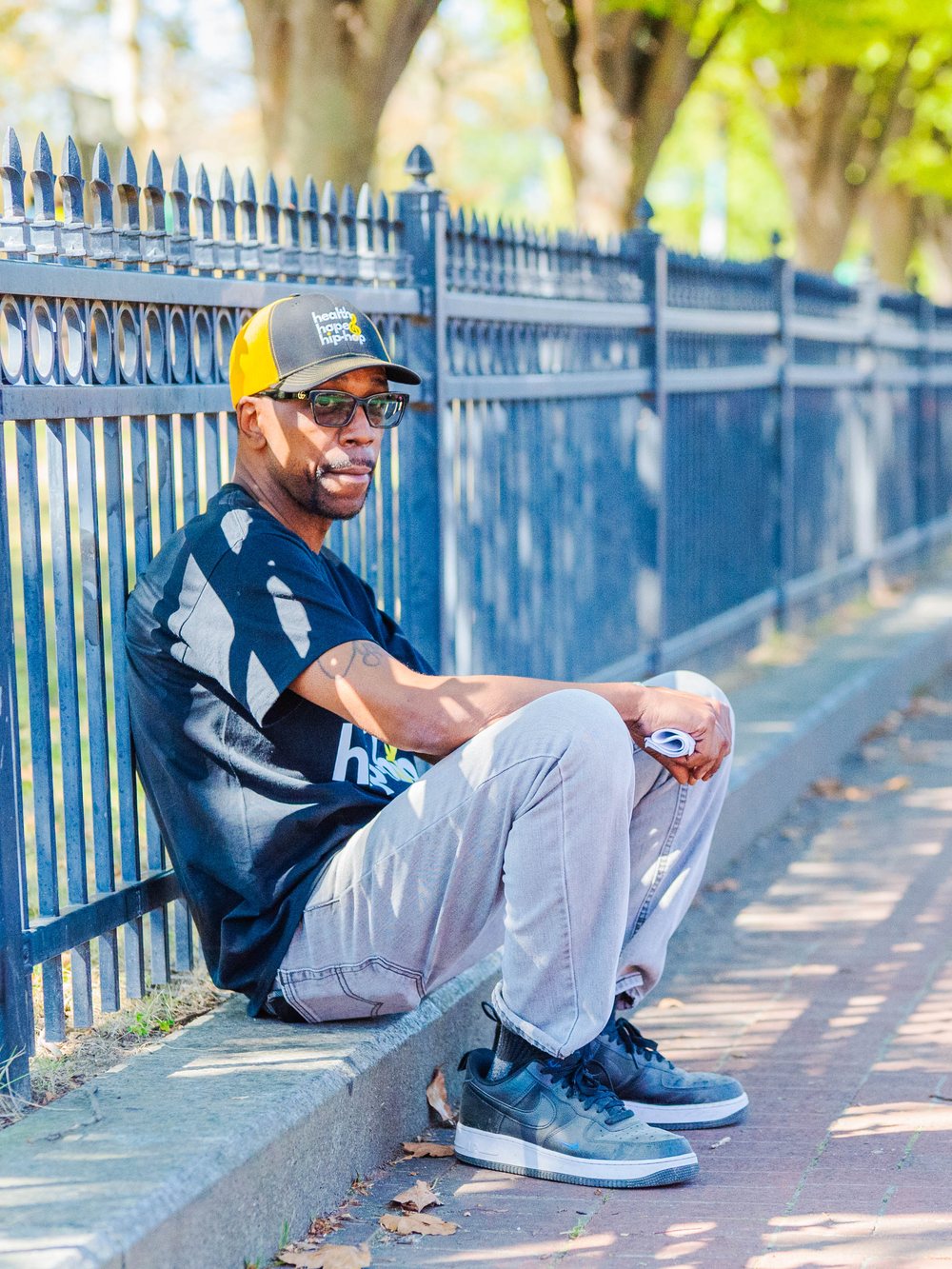
I'm the community they were talking about. In 1989 I was an artist myself — that's me at the New Music Seminar in Manhattan, badge around my neck, standing next to Queen Latifah. Hip-hop isn't a strategy I picked up later. It's where I come from. And that music was already a trusted vehicle — it got into houses a pamphlet never reached. Hip-hop had done this before, and done it well. So I took that blueprint and expanded it: across every disease area instead of one, and into a foundation instead of a single record.
What made the committees so hard to sit in wasn't that nobody cared. Everybody cared. The budgets were real and the people were serious. It was watching the same idea come back around every cycle with a new name on it, and knowing before the slide finished loading that it wasn't going to reach anybody I grew up with.
Because the thing they were missing isn't a messaging problem. It's a trust problem. You cannot hand someone information and expect them to act on it if they've spent their whole life being dismissed by the institution handing it over. Trust is built by showing up more than once, in a place people already are, in a form they already respect.
That's the entire design of this foundation. We show up in August with backpacks. We show up in October with clinicians. We put out a podcast in between. By the time we're talking about screenings, we're not strangers making an ask — we're people who have been around.
And we don't limit it to one disease, because the failure was never about one disease. It's about who gets believed, who gets followed up with, and who gets a call back. That happens in oncology and it happens everywhere else too.
— Oya Gilbert, Founder & CEO
Other ways to give
Employer matching
Many employers double their employees' gifts. Ask your HR team, and give them our EIN: 99-0880621
Donor-advised fund
Recommend a grant to Health, Hope & Hip-Hop Foundation, Inc., EIN 99-0880621
By check
Health, Hope & Hip-Hop Foundation, Inc.
2 N. Washington
Street, PO Box 211
Greencastle, PA 17225
Partner with us
For companies looking to work with us at events and across the year. See sponsorship →
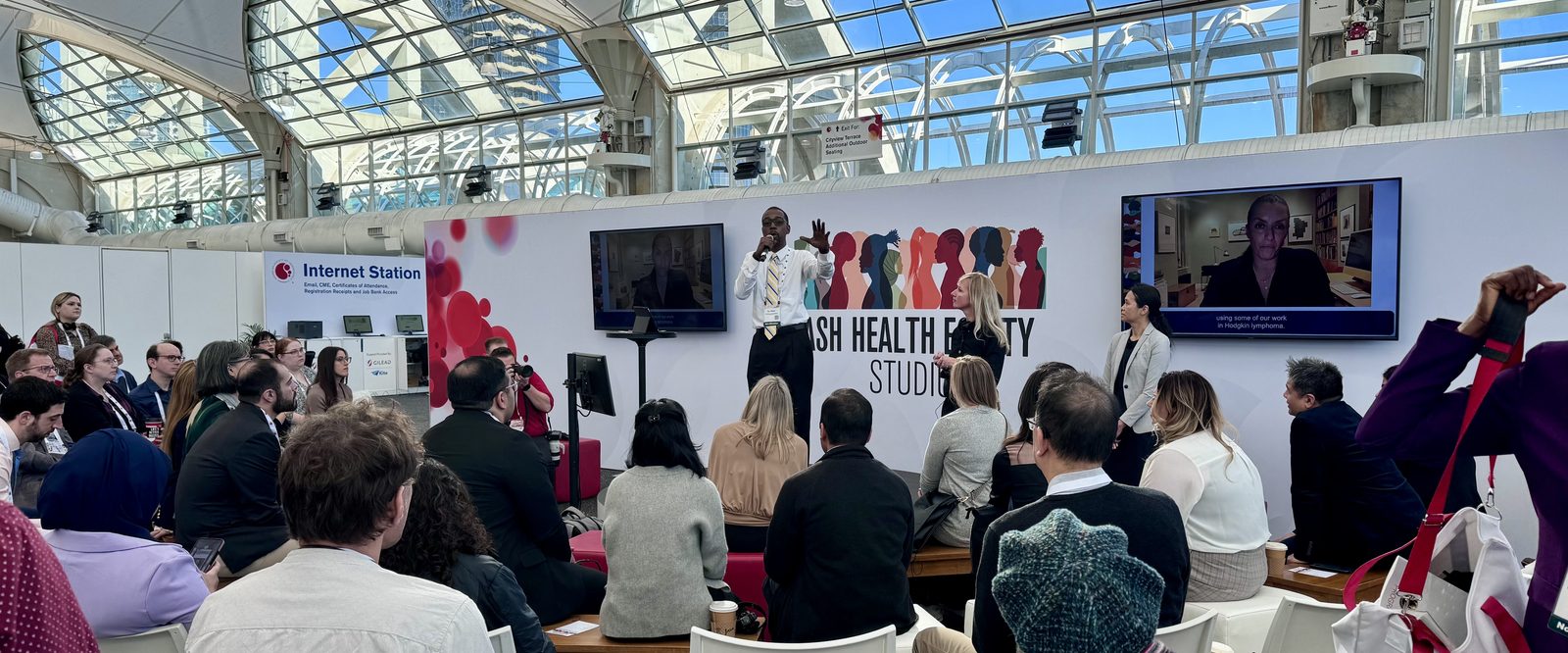
We founded International Hip Hop Health Day, observed annually on June 17. Our founder received the Myeloma Hero Award at the 2025 CURE Blood Cancer Heroes, and was lead author on a multiple myeloma disparities paper published in the Journal of Cancer Education — written with two other patient authors and a team of healthcare professionals.



This is bigger than a donation.
It's a stand for earlier detection, better information, and care that reaches people before the window closes. Help us turn pain into power.
Give now